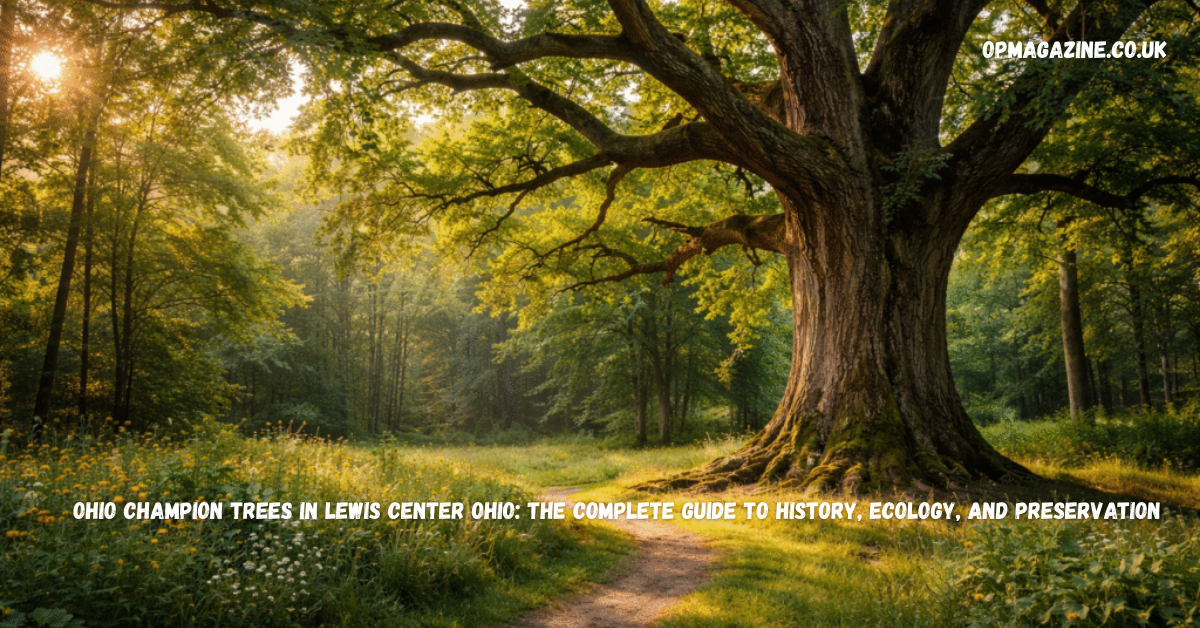
Lewis Center Ohio is home to some of the state’s most majestic living giants: the Ohio Champion Trees. These towering specimens are not only ecological marvels but also living chronicles of history, heritage, and community identity. From sprawling White Oaks to riverbank Sycamores, these trees are much more than impressive specimens—they are keystones of biodiversity, sources of economic value, and silent witnesses to centuries of Ohio’s transformation.
This guide explores everything you need to know about Ohio Champion Trees Lewis Center Ohio, from their identification and measurement to preservation, economic benefits, and the role of the community in safeguarding these natural treasures.
Understanding Champion Trees
What Defines a Champion Tree?
A Champion Tree is not just a large or old tree. In Ohio, it is a tree recognized for its exceptional size relative to its species, based on a combination of trunk circumference, height, and crown spread. Trees that achieve high scores through these measurements are designated state champions, and in rare cases, national champions.
Champion trees are evaluated through a rigorous, scientific approach to ensure their recognition reflects true ecological significance, rather than mere visual impression.
How Trees Earn State and National Champion Status
The Ohio Department of Natural Resources (ODNR) maintains records of these giants. The formula for a champion designation is: Circumference (inches) + Height (feet) + 1/4 Average Crown Spread (feet) = Total Points.
Trees with the highest scores in their species are recognized as champions. This standardized approach allows Lewis Center Ohio Champion Trees to be accurately compared to specimens across Ohio and the nation.
The Ohio Champion Tree Program
Purpose and Mission
The Ohio Champion Tree Program is a statewide initiative managed by ODNR’s Division of Forestry. Its mission is to:
- Identify and document the largest specimens of native and non-native tree species.
- Preserve genetic diversity by tracking trees that have survived centuries of environmental stressors.
- Educate the public on the ecological and cultural value of these giants.
Measuring Trees: Circumference, Height, and Crown Spread
Accurate measurement is critical. Trunk circumference is measured at 4.5 feet above the ground, height is recorded using laser rangefinders or clinometers, and crown spread is averaged across multiple angles.
Official Nomination and Verification Process
Anyone can nominate a tree. Submissions are reviewed, and ODNR foresters verify measurements. This process ensures Lewis Center Ohio Champion Trees are documented accurately and protected whenever possible.
Iconic Champion Tree Species in Lewis Center Ohio
Lewis Center’s champion trees include hardwood giants that thrive in Ohio’s fertile soils.
White Oak: Strength, Longevity, and Legacy
Scientific Name: Quercus alba
Lifespan: 200–300 years
Significance: White Oaks are strong, resilient, and culturally significant, often serving as historical landmarks in the community.
Sycamore: River Giants of Delaware County
Scientific Name: Platanus occidentalis
Habitat: Often along waterways like the Olentangy River
Feature: Massive trunks and wide canopies, making them frequent champions
Sugar Maple: Colorful and Ecologically Vital
Scientific Name: Acer saccharum
Feature: Prized for stunning fall colors and maple syrup production
Ecological Role: Supports local wildlife and soil health
Silver Maple and Tulip Poplar: Urban and Suburban Survivors
Adapted to moist soils and urban environments
Frequently found in residential yards, parks, and open spaces
Thrive alongside human habitation while still achieving impressive dimensions
Delaware County’s Ecological Significance
Soil Quality and Glacial Influence
Lewis Center sits atop glaciated plains with rich, fertile soils, ideal for deep-rooted hardwoods. These soils allow trees to establish strong root systems and achieve champion growth over decades.
Riparian Corridors and Water Access
Rivers like the Olentangy and Scioto create natural corridors, providing consistent water to support rapid growth. Trees along these waterways often develop massive trunks and expansive crowns.
Biodiversity and Wildlife Habitat
Champion trees serve as keystone species, offering habitats for birds, mammals, insects, fungi, and microorganisms. Their presence significantly enhances local biodiversity and contributes to ecosystem resilience.
Historical Significance of Lewis Center Trees
Trees as Witnesses to the Past
Many Lewis Center Ohio Champion Trees predate suburban development. They have stood through changing land use, agricultural clearing, and urban expansion, providing a living link to Ohio’s past.
Indigenous and Pioneer Era Connections
These trees were present during the time of the Lenape (Delaware) tribes and later served as boundary markers for settlers’ land surveys. Their longevity gives them cultural as well as ecological significance.
Timber, Agriculture, and the Survival of “Wolf Trees”
Some trees were intentionally left in pastures as shade for livestock or for landmark purposes. These surviving giants, often called “wolf trees,” provide a direct connection to historical land management practices.
Urbanization vs. Preservation in Lewis Center
Neighborhoods, Parks, and Private Estates
Many champion trees grow in everyday landscapes such as school grounds, parks, residential yards, and cemeteries. This demonstrates that large, ecologically important trees can thrive alongside urban development.
Threats from Construction, Soil Compaction, and Pests
Despite their resilience, these trees face root compaction from heavy machinery, soil grade changes during construction, pest infestations such as Emerald Ash Borer or Oak Wilt, and fragmented habitats leading to vulnerability to storms.
Heat Islands and the Role of Large Trees
Preserving large trees mitigates urban heat islands, lowers energy consumption, and provides natural cooling to surrounding neighborhoods.
Economic Value of Champion Trees (USD Benefits)
Trees are not only ecological assets—they have measurable economic value.
Stormwater Management
Large trees absorb thousands of gallons of water annually, reducing the need for expensive drainage infrastructure.
Energy Savings from Shade
A mature tree can lower cooling costs by $50–$100 per year for homes and buildings.
Property Value Increase
Studies show that homes with mature trees can see up to a 15% increase in property value.
Carbon Sequestration and Climate Impact
Older, larger trees sequester significantly more carbon than younger trees. Each champion tree stores hundreds of pounds of CO₂ annually, offering measurable USD benefits in carbon offset terms.
Preservation and Conservation Efforts
Role of Landowners and Community
Private landowners can protect trees during development by preserving root zones, adjusting building plans, or designating trees as heritage specimens.
Municipal Ordinances and Tree Protection
Some Delaware County municipalities have tree preservation ordinances, restricting the removal of trees above a certain size.
Conservation Easements and Public Awareness Programs
Legal tools like conservation easements protect forests and champion trees for future generations. Public awareness programs educate residents about tree value, measurement, and conservation.
Community Engagement and Education
Nominating a Tree in Lewis Center
Residents can measure and submit large trees for champion status through ODNR. This encourages active participation in conservation.
Citizen Science and Environmental Education
Schools and local groups can use champion trees as tools for teaching tree biology, measurement techniques, and urban ecology.
Planting the Champions of Tomorrow
Promoting native tree planting ensures the next generation of champions, creating a legacy for future residents.
Eco-Tourism and Public Viewing
Highbanks Metro Park
Home to ancient oaks, maples, and Sycamores, offering visitors a chance to view mature trees in natural settings.
Alum Creek State Park
Massive Cottonwoods and Willows along the reservoir highlight Delaware County’s champion-worthy trees.
Other Public Spaces with Champion Trees
Shale Hollow Park, Char-Mar Ridge, and neighborhood parks provide accessible examples of Lewis Center Ohio Champion Trees.
Comparative Analysis: Standard Trees vs. Champion Trees
| Feature | Young Tree (5-year Maple) | Champion Tree (200-year Oak) |
|---|---|---|
| Stormwater Intercepted | ~50 gallons | 5,000+ gallons |
| Carbon Sequestered | 10 lbs | 500+ lbs |
| Energy Savings | <$5 | $75+ |
| Air Pollution Removed | Minimal | Significant |
| Property Value Boost | Low | High |
This demonstrates why protecting large trees is both an ecological and economic priority.
Future of Lewis Center’s Canopy
Urban Forestry Planning for Champion Trees
Shifting from ornamental planting to functional urban forestry ensures sufficient soil, space, and species diversity for long-term growth.
Diversity, Space, and Legacy Planting
Planting a mix of species reduces risks from pests and disease, while planning street trees to reach full canopy potential safeguards future champions.
Ensuring Generational Stewardship
By educating communities, preserving existing giants, and planting strategically, Lewis Center residents ensure that Ohio Champion Trees remain part of the landscape for centuries.
FAQs
What qualifies a tree as a champion in Ohio?
Measurements of trunk circumference, height, and crown spread, combined into a point total, determine champion status.
Are champion trees legally protected?
Not automatically. Protection depends on property ownership, municipal ordinances, and conservation efforts.
Can anyone nominate a tree?
Yes. Residents can submit measurements to ODNR for verification.
Are champion trees publicly accessible?
Some are on private property, but public parks offer plenty of accessible examples.
Why are White Oak, Sycamore, and Maple common among champions?
They grow large, live long, and thrive in Ohio’s soils and climate, making them ideal candidates for champion status.
Conclusion
Ohio Champion Trees Lewis Center Ohio are living monuments that connect residents to the region’s ecological history, cultural heritage, and economic value. From providing habitat for wildlife to lowering energy costs and increasing property values, these trees are invaluable assets.
Preservation requires a collaborative effort: landowners, municipal authorities, conservation groups, and community members all play critical roles. By measuring, nominating, educating, and planting trees, Lewis Center can ensure that these ancient giants continue to thrive, providing shade, biodiversity, and inspiration for generations to come.
The quiet majesty of these champions is a reminder that even amid urban development, nature endures—and it is up to the community to protect it.
Leave a Reply