Category: Technology

  • Avtub Explained: The Ultimate Guide to Features, Safety, Content, and User Experience in 2025

    Avtub Explained: The Ultimate Guide to Features, Safety, Content, and User Experience in 2025

    In the ever‑expanding world of online content and digital platforms, the term Avtub has sparked curiosity, debate, and widespread search interest in 2025. People search for it for many reasons — from looking for video content and tutorials to trying tools and niche streaming services. But what exactly is Avtub? Why are people talking about it? And most importantly, is it safe and useful?

    This guide provides a full explanation of Avtub — from its meaning and features to safety considerations, use cases, comparisons with other platforms, and future trends. Whether you’re a casual user, creator, student, or professional, this article gives you everything you need to know about Avtub in one place.

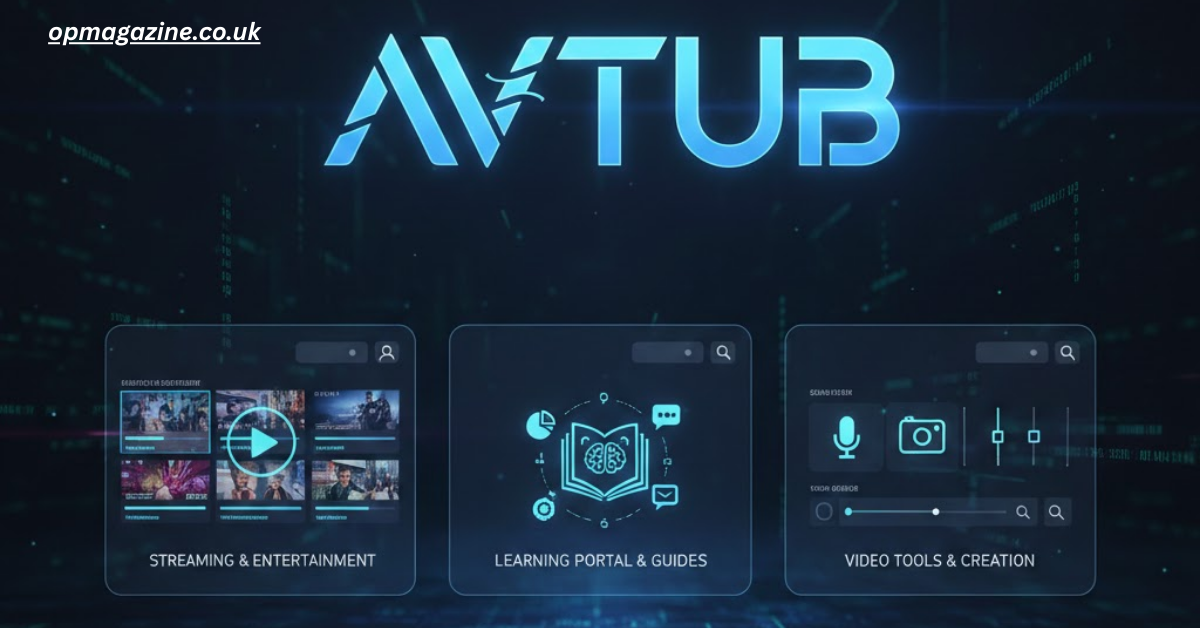
    At its simplest, Avtub is a term that appears in search engines, forums, and online conversations referring to various digital platforms, tools, or media hubs that may offer video streaming, content libraries, utility tools, or informational articles. However, that term isn’t tied to one universally accepted website or service — different domains and websites use the term in different ways.

    Some domains branded as Avtub aim to help users with digital tools and blog content, while others are unverified streaming sites with unclear legality. That’s why it’s important to understand which version of Avtub you’re referencing or visiting before engaging with it.

    What is Avtub?

    Easy Definition for Beginners

    “Avtub” is not a single service or product like YouTube. Instead, it’s a term used by different platforms — often as part of a domain name — that can either:

    • Provide digital tools, blog content, and utilities (e.g., article rewriters, converters, how‑to guides).
    • Offer streaming and video services (both legitimate and non‑verified).

    Depending on which Avtub domain you visit, your experience and the content available can differ significantly.

    Different Versions and Platforms

    There are multiple domains associated with the Avtub term, and they vary widely:

    • AvtubWeb — provides online utilities, blog articles, and productivity tools without requiring a login or payment.
    • Avtub.media — reported to have low trust scores and potentially unsafe content.
    • Avtub.press — independently assessed as adult content and flagged for security risks.
    • Other branded or unrelated platforms using similar terms offer lifestyle, fitness, or unrelated blog content.

    This variation means the term Avtub doesn’t point to a single authoritative platform — user caution is essential.

    Why Avtub is Trending

    Avtub has become a trending query in 2025 for several reasons:

    • Name familiarity: Short and catchy terms like “Avtub” are easy to remember and often resurfaced by search engines.
    • Curiosity: Many users encounter the term in search suggestions or links shared across social media.
    • Diverse domains: Multiple websites using the same term push overall search volume up.
    • Content variety: Some versions offer useful digital tools and informational blogs, while others provide free streaming or video content.

    However, because the term points to different things depending on the domain, interest doesn’t necessarily mean endorsement — and some versions could pose safety risks if visited without verifying their trustworthiness.

    Key Features of Avtub

    Because Avtub isn’t one single product, the features depend on the specific site you’re using. Here are the main categories of features users might find:

    Video Streaming & Quality Options

    Some Avtub‑branded sites claim to provide video streaming services, such as movies, shorts, or user‑uploaded videos. In these cases, features may include:

    • User‑uploaded content
    • Streaming in standard or high definition
    • Search and category browsing

    But unlike licensed streaming services (e.g., Netflix), it’s not always clear whether this content is officially licensed or complies with copyright laws.

    Tutorials and How‑to Guides

    Certain Avtub platforms focus on educational content, helping users:

    • Learn tech insights
    • Access marketing or business strategies
    • Explore how‑to tutorials

    These content pieces are usually text‑based and aim to inform or train readers.

    Digital Tools & Utilities

    Some Avtub domains offer free tools accessible without logging in, like:

    • Bitcoin to PKR rate converters
    • Word counters
    • Text utilities
      These tools help users quickly accomplish common tasks online.

    Free Access & Simple UI

    Many versions emphasize free access without requiring subscriptions, aiming for a simple, mobile‑responsive design with minimal barriers to entry.

    Who Should Use Avtub? (Use Cases)

    Since “Avtub” can mean different things, the user base also varies widely:

    Students and Learners

    For versions that provide guides and tools, students may benefit from tutorials and productivity utilities.

    Casual Viewers

    If a site offers video content, casual visitors may watch clips or streamed videos — but should first confirm the site’s legality and safety.

    Creators and Educators

    Some platforms using the Avtub term may allow uploads and content creation, though monetization policies are not clearly defined across all domains and must be checked individually.

    Professionals

    Certain informational blogs branded under Avtub aim to serve professionals seeking insights in tech, marketing, or business.

    How to Get Started with Avtub

    The steps you follow depend on the version of Avtub you want to use:

    1. Confirm the domain you’re visiting. Avoid ambiguous or unrelated URLs.
    2. Check the site’s privacy policy and contact information. Trusted sites usually provide clear details.
    3. Explore content categories or tools from the homepage.
    4. Create an account only if required and only if the site is verified.
    5. Use search filters to find relevant topics or videos.

    It’s important to validate the site’s safety before logging in or submitting personal information.

    Safety & Privacy Tips for Avtub Users

    Because multiple sites use the Avtub name — some of which are flagged for low trust scores or inappropriate content — being cautious is essential.

    Check Website Trustworthiness

    Use tools like site reputation checkers or read reviews before entering personal data.

    Avoid Unknown Downloads

    Sites offering free downloads or urging you to install apps are riskier.

    Don’t Share Sensitive Information

    Never share credit card details or sensitive personal data unless the site is verified and secure.

    Use Antivirus and Ad Blockers

    These tools protect your device from pop‑ups and malware.

    Use Legal, Licensed Alternatives

    When in doubt, choose well‑known platforms like YouTube, Vimeo, or subscription services.

    Avtub vs Other Streaming & Learning Platforms

    AspectAvtub (Certain Domains)Major Platforms
    LicensingVaries widely (unclear)Clear licensing agreements
    SafetyMixed trust scores reportedHigh security standards
    Content QualityDepends on sourceProfessionally curated
    Ad ExperienceOften unverifiedControlled advertisement delivery
    User Data ProtectionVariesStrong protection and clear policies

    Trusted platforms maintain clear privacy and content policies; whereas some Avtub domains — especially ones flagged for adult content — may lack these protections.

    Benefits of Using Trusted Avtub Domains

    For versions of Avtub that provide tools and articles:

    Easy Access to Digital Tools

    No sign‑ups or payments often required.

    Free Educational Content

    Helpful for learners and casual readers.

    Productivity Utilities

    Online converters and text tools assist with quick tasks. Avtubweb

    For user‑generated content versions, benefits can include variety and community engagement — as long as legality and safety are confirmed.

    Tips to Improve Your Avtub Experience

    • Use search and categories to find relevant material.
    • Favor reputable sources rather than ambiguous URLs.
    • Bookmark useful pages for repeat access.
    • Disable intrusive pop‑ups with ad blockers.

    The Future of Avtub

    As the digital ecosystem evolves in 2025 and beyond, the concept of Avtub may develop in multiple directions:

    • Greater clarity and legitimacy for certain informational or tool‑based domains. Avtubweb
    • More user‑generated content platforms emerging, potentially with better safety and moderation tools.
    • Increased search traffic for ambiguous or unverified domains, driving awareness around safety and legal use.

    Advancements in AI‑powered personalization, multimedia integration, and improved interfaces might shape future versions — but confirming legitimacy will remain paramount.


    Real Examples & Personal Notes

    Various versions of Avtub offer widely different experiences:

    • AvtubWeb — generally safe utilities and content tools with clear privacy policies.
    • Avtub.media / Avtub.press — flagged for low trust or adult content; users should be cautious.
    • Others with lifestyle or unrelated content show the term’s diverse usage without a uniform brand identity. The AV Tub

    Conclusion

    Yes — if you are using a verified, safe version of Avtub that clearly states its purpose and privacy practices. These can offer helpful tools and content without payment barriers. Avtubweb

    However, users should avoid unnamed or suspicious domains, especially those flagged for adult content or low security. Always confirm site reputation before engaging.

    In short: Avtub can be valuable — when approached with awareness and caution.

    FAQs

    1. What is Avtub?
    “Avtub” refers to various online platforms that may offer tools, video content, or informational articles — the experience varies widely by domain.

    2. Is Avtub safe?
    Safety depends on the specific site you visit. Some are verified and helpful; others may be untrustworthy or risky. Always check reviews and site policies.

    3. Is Avtub free to use?
    Many versions are free and do not require sign‑ups. However, features vary from domain to domain.

    4. Can I upload content to Avtub?
    Only certain versions designed for user uploads permit this — check the site’s terms first.

    5. Should I use Avtub instead of YouTube?
    For mainstream video content and strong safety protections, platforms like YouTube are more reliable. Use Avtub versions only after confirming legitimacy.

    6. How do I know if an Avtub site is safe?
    Look for clear privacy policies, contact info, and independent safety reviews before engaging.

  • Pigeimmo Explained: The Ultimate Guide to Its Two Powerful Meanings

    Pigeimmo Explained: The Ultimate Guide to Its Two Powerful Meanings

    Pigeimmo is a rare example of a keyword with two completely different yet equally important meanings, both deeply rooted in specialized markets. On one side, Pigeimmo represents a next-generation, AI-driven real estate investment platform focused on predictive analytics, behavioral intelligence, and fractional ownership. On the other, it is globally recognized as the world’s leading digital marketplace for racing pigeons, particularly those originating from elite Belgian bloodlines.

    This dual identity has created confusion for many searchers—but it has also made Pigeimmo a fascinating case study in how digital platforms transform traditional industries. Whether you arrived here as an investor, a real estate professional, a pigeon racing enthusiast, or simply someone trying to understand what “Pigeimmo” actually means, this guide covers everything.

    What Is Pigeimmo? (Why the Term Has Two Different Meanings)

    The word Pigeimmo is a linguistic fusion. It combines “pigeon”—a symbol associated with navigation, homing ability, and specialization—with “immobilier,” the French word for real estate. Depending on context, geography, and industry, the term evolved in two distinct ecosystems.

    Search engines often surface mixed results because:

    • Both platforms are well-established
    • Both operate in high-value niche markets
    • Both rely heavily on data, valuation, and trust

    Understanding Pigeimmo correctly requires understanding intent. Let’s break down both meanings in detail.

    Pigeimmo as a Smart Real Estate Investment Platform

    The Vision Behind Pigeimmo in Real Estate

    The real estate interpretation of Pigeimmo emerged from a growing realization: traditional property investment tools are outdated. For decades, investors relied on static listings, historical averages, and delayed reports. Pigeimmo reimagines this process using AI, real-time data, and behavioral intelligence.

    The “pigeon” element symbolizes alertness and navigation, while “immobilier” anchors the platform firmly in property investment. The vision is clear: make real estate as intelligent, data-driven, and accessible as modern financial markets.

    Intelligent Property Discovery and Investment Tools

    At the core of Pigeimmo’s real estate platform is an intelligent investment interface. Rather than showing properties as simple listings, each asset is treated as a dynamic investment profile.

    Users can analyze:

    • Projected rental yield
    • Estimated ROI over time
    • Risk scoring based on market volatility
    • Neighborhood growth indicators
    • Liquidity potential

    This approach mirrors how institutional investors evaluate assets, but it is delivered in a way that remains accessible to individuals. Visual dashboards replace spreadsheets, allowing faster and more confident decision-making.

    Data Analytics as the Backbone of Modern Real Estate

    Data is the currency of modern investment, and Pigeimmo is built around large-scale property and urban data streams.

    Key data inputs include:

    • Historical price evolution
    • Rental demand and occupancy rates
    • Infrastructure development patterns
    • Zoning and regulatory changes
    • Socioeconomic indicators

    Instead of reacting to market shifts after they occur, users gain predictive insight. For example, identifying emerging neighborhoods months or years before prices peak can significantly improve long-term returns.

    AI and Behavioral Intelligence in Property Forecasting

    One of Pigeimmo’s most innovative features is its use of micro-behavioral intelligence. Traditional models focus on macroeconomics, but Pigeimmo goes deeper by analyzing how people actually move and behave in cities.

    Behavioral signals include:

    • Foot traffic density
    • Mobility and commuting flows
    • Retail and café density growth
    • Evening and weekend activity levels
    • Lifestyle clustering patterns

    These indicators often signal neighborhood transformation before price increases become visible. For instance, rising coworking spaces may indicate a future remote-work hub, while increased nightlife foot traffic can foreshadow rental demand growth.

    Fractional Real Estate Ownership on Pigeimmo

    One of the biggest barriers in real estate has always been capital requirements. Pigeimmo addresses this through fractional ownership, allowing users to invest in shares of properties rather than entire assets.

    This model:

    • Lowers entry barriers
    • Enables portfolio diversification
    • Reduces risk concentration
    • Makes passive income accessible

    Instead of tying all capital into one property, investors can spread exposure across multiple locations, property types, and risk profiles—an approach long used by large funds, now available to individuals.

    Benefits for Real Estate Agents and Professionals

    Pigeimmo is not just for investors. Real estate professionals benefit from advanced intelligence tools that improve both efficiency and profitability.

    Agents gain access to:

    • Accurate pricing intelligence
    • Buyer behavior insights
    • Market gap identification
    • Smarter marketing targeting
    • Streamlined compliance workflows

    By reducing guesswork, agents can position properties more competitively and focus on relationship building rather than administration.

    How the Pigeimmo Real Estate Ecosystem Works

    The ecosystem is designed to be intuitive:

    1. Users define goals (budget, risk, yield)
    2. AI matches suitable opportunities
    3. Investors review deep analytics
    4. Transactions occur through secure digital processes
    5. Portfolios are monitored via dashboards

    The result is a unified investment journey from discovery to long-term growth.

    Pigeimmo as the Global Marketplace for Pigeon Racing

    What Is Pigeon Racing and Why It Matters

    Pigeon racing is a centuries-old competitive sport, particularly revered in Belgium, the Netherlands, and parts of Europe and Asia. Trained homing pigeons are released hundreds of kilometers away, and the fastest bird to return wins.

    This sport involves:

    • Precision breeding
    • Performance tracking
    • Genetics and lineage analysis
    • Significant financial stakes

    Some champion pigeons have sold for hundreds of thousands—and in rare cases, over one million euros.

    Pigeimmo as the World’s Leading Pigeon Auction Platform

    In the pigeon racing world, Pigeimmo functions much like a stock exchange or elite auction house. It centralizes a once fragmented market and connects buyers and sellers globally.

    The platform features:

    • Timed online auctions
    • Verified pedigrees
    • Seller reputation systems
    • International buyer access

    Buyers from Europe, China, Taiwan, the Middle East, and South Africa actively compete for elite bloodlines.

    Racing Pigeon Pedigrees and Bloodline Valuation

    In pigeon racing, genetics determine value. A bird’s worth is tied to:

    • Its racing performance
    • The success of its parents and grandparents
    • Proven bloodlines

    Pigeimmo listings often include detailed pedigree charts, allowing buyers to trace lineage across generations. This transparency is critical in a market where reputation and trust are everything.

    How to Buy Racing Pigeons on Pigeimmo

    The buying process typically involves:

    1. Creating an account
    2. Researching bloodlines
    3. Evaluating seller feedback
    4. Participating in auctions
    5. Arranging specialized transport

    While Pigeimmo does not ship birds directly, it connects buyers with licensed animal transport specialists experienced in international logistics.

    How to Sell Pigeons on Pigeimmo

    For sellers, Pigeimmo offers global exposure. Successful listings require:

    • Accurate pedigrees
    • Clear photographs
    • Honest descriptions
    • Transparent performance history

    A strong seller reputation often results in higher final auction prices, turning elite breeding into a sustainable business model

    Pigeimmo’s Impact on the Global Pigeon Racing Industry

    Pigeimmo has:

    • Increased market transparency
    • Globalized access to elite genetics
    • Raised competition standards worldwide
    • Created economic sustainability for breeders

    While some traditionalists worry about over-commercialization, most agree the platform has revitalized the sport.

    Why Pigeimmo Works in Two Completely Different Industries

    Despite their differences, both versions of Pigeimmo share core principles:

    • Auction-based valuation
    • Data-driven decision-making
    • Trust and transparency
    • Global accessibility

    Both platforms transform niche expertise into scalable digital ecosystems.

    Pigeimmo vs Traditional Platforms

    Compared to traditional real estate portals or local pigeon clubs, Pigeimmo offers:

    • Better data depth
    • Broader reach
    • Faster value discovery
    • Higher transparency

    This is why it continues to dominate its niches.

    Advantages and Limitations of Pigeimmo

    Key Advantages

    • Democratized access
    • Institutional-grade intelligence
    • Global reach
    • Transparent pricing

    Potential Limitations

    • Learning curve for beginners
    • Market speculation risks
    • Capital exposure

    Used wisely, however, Pigeimmo remains a powerful tool.

    Who Should Use Pigeimmo?

    Pigeimmo is ideal for:

    • Property investors
    • Real estate professionals
    • Pigeon fanciers and breeders
    • Collectors and enthusiasts
    • Data-driven decision-makers

    Future of Pigeimmo and Digital Niche Marketplaces

    As AI evolves, platforms like Pigeimmo are expected to:

    • Expand predictive modeling
    • Improve personalization
    • Scale globally
    • Influence urban development and niche sports economics

    The future is increasingly specialized, data-driven, and digital.

    FAQs

    Why does Pigeimmo have two meanings?
    Because the term evolved independently in two specialized industries.

    Is Pigeimmo legitimate?
    Yes, both platforms are well-established within their respective niches.

    Can beginners use Pigeimmo?
    Yes, but research and education are essential.

    Is Pigeimmo international?
    Yes, both interpretations operate globally.

    How does Pigeimmo make money?
    Through platform fees, listings, and transaction commissions.

    Final Thoughts:

    Pigeimmo is more than a word—it represents how technology reshapes traditional markets. Whether guiding smarter property investments or powering the global pigeon racing economy, Pigeimmo proves that data, transparency, and accessibility are the future.

    Understanding both meanings is the key to understanding why Pigeimmo continues to dominate search results, conversations, and niche industries worldwide.

  • Wattip Review 2025: Ultimate Guide to Smart Energy Monitoring, Savings, and Home Automation

    Wattip Review 2025: Ultimate Guide to Smart Energy Monitoring, Savings, and Home Automation

    In an age of rising electricity costs and growing awareness about energy waste, homeowners and small business operators everywhere are searching for simple, effective ways to track — and reduce — their electricity consumption. Enter wattip: a smart energy tool that lets you see exactly how much electricity each appliance or circuit in your home or office draws — in real time. Rather than relying on vague monthly bills or a bulky, whole‑home utility meter, wattip shows clear, intuitive numbers: which devices use the most energy, when usage spikes, and how costs accumulate.

    With energy prices climbing and people running more devices than ever before (from air coolers and heaters to multiple chargers, computers, and kitchen appliances), tools like wattip offer a powerful way to gain control — letting you make better choices, cut waste, and lower bills.

    This article is your ultimate guide to wattip in 2025. We’ll walk you through what wattip is, why it matters, how it works under the hood, the hardware and software features it offers, installation steps, how to get the most out of it, and how it stacks up against other energy‑monitoring solutions. We’ll also highlight real-world benefits, backed by research and case studies where possible.

    Whether you’re a homeowner, renter, or small business owner — by the end of this guide, you’ll understand whether wattip is right for you, and how to use it to start saving money, energy, and stress.

    What Is Wattip and Why It’s a Game-Changer

    Wattip Explained in Simple Terms

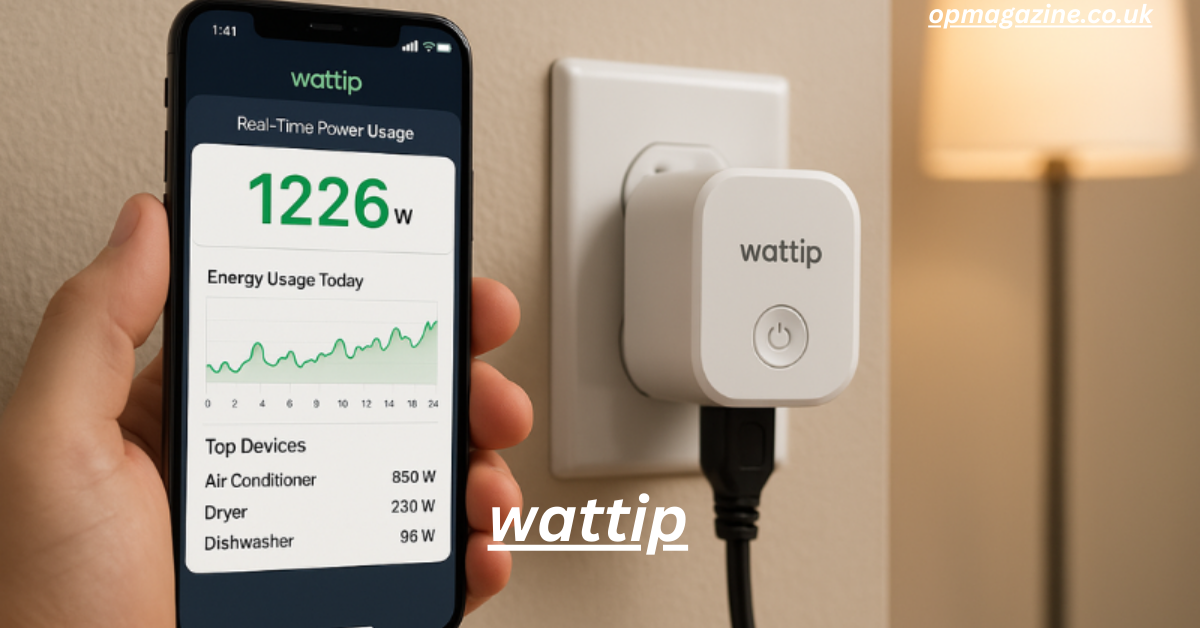
    At its core, wattip is a smart energy monitoring system designed to give you detailed insight into your electricity consumption — not just at the whole‑home level, but down to individual devices or circuits. Unlike a standard utility meter, which only reports total usage over a month, wattip provides real‑time tracking: you can see when an appliance turns on or off, how much power it draws when active, and how that contributes to your overall bill.

    This kind of visibility changes energy management from a guessing game — “I think the AC uses a lot” or “maybe the fridge is expensive to run” — into concrete, actionable data.

    Who Can Benefit: Homeowners, Renters, and Small Businesses

    • Homeowners: If you have multiple rooms, heavy appliances (ACs, heaters, refrigerators), or run several devices simultaneously, wattip helps you pinpoint the biggest energy consumers.
    • Renters: Even if you don’t touch the main panel, a smart‑plug version of wattip lets you monitor individual devices — great for apartments or houses where you don’t want to alter wiring.
    • Small business owners / small offices: Lights, computers, printers, HVAC — business spaces often run multiple devices all day. Using wattip helps optimize daily operations, spot waste, and reduce operating costs.

    In short: wattip is for anyone who wants clarity, control, and savings.

    How Wattip Works: Technology Behind the Scenes

    Real‑Time Energy Tracking and Device‑Level Monitoring

    Wattip uses sensors — either smart plugs or circuit/panel sensors — to measure the flow of electricity. These sensors detect voltage and current, calculate power usage (in watts or kilowatts), and transmit the data to a central system (usually via WiFi). According to sources, smart‑plug–based energy monitors typically consume ~1–2 watts themselves, while whole‑home systems consume slightly more for sensing and data transmission.

    Once installed, wattip provides a constant stream of data: you see when a device is switched on, when it cycles, and how many kilowatt‑hours (kWh) it uses over time.

    AI‑Powered Insights and Smart Analytics

    Beyond just raw numbers, wattip’s value increases with analytics. Over time, the system “learns” usage patterns, detects when devices behave unusually (e.g. drawing more power than usual), and can alert the user. This helps catch inefficiencies — say, a fridge motor working overtime because of a faulty thermostat, or an old heater using excessive power.

    The dashboard — the user interface — turns raw data into simple charts, daily/weekly/monthly summaries, and ranked lists of the biggest energy consumers, so you don’t need to interpret raw watts per hour.

    Dashboard Overview: Visualizing Your Energy Use

    Most wattip systems present a unified dashboard: real‑time usage, daily or monthly totals, alerts, and device‑specific breakdowns. This consolidated view makes it easy to understand consumption at a glance — which appliances are draining the most power, when consumption spikes, and how usage trends change over time.

    Wattip Product Features and Hardware Options

    Wattip isn’t one-size-fits-all — it offers hardware and software flexibility depending on your needs and setup.

    Smart Plugs: Monitor Single Devices Easily

    For apartments, renters, or simple homes, smart plugs are often the easiest option. You plug the device into a normal wall outlet, connect it to WiFi, and wattip begins tracking consumption. This approach is low‑cost and ideal for devices like TVs, computers, refrigerators, heaters, or any standalone electronics. It’s also portable — if you move, you can take the smart plug with you.

    However, smart plugs are mostly suited for low- to moderate-power appliances. High‑wattage machines (like large ovens, water heaters, or heavy industrial equipment) may not work well with standard smart plugs.

    Panel Sensors: Track Full Circuits and Large Appliances

    For comprehensive monitoring — especially in homes with many circuits, multiple heavy appliances, or small offices — panel sensors (clamp meters or CT sensors) are useful. These monitor entire circuits or even the main feed, giving a holistic view of power consumption. This way you don’t have to plug every appliance into a smart plug. Instead, you see room-by-room or circuit-by-circuit usage.

    For larger households or business spaces, this can be more efficient, scalable, and less cluttered.

    App Features: Real-Time Alerts, Scheduling, and Recommendations

    • Real-time power usage and consumption charts.
    • Alerts for unusual power spikes — useful for spotting faulty appliances, wiring issues, or unexpected energy drains.
    • Scheduling and automation: set timers so devices turn off after a certain time; schedule heavy loads (washers, water heaters) during off-peak hours.
    • Historical data and trends: daily, weekly, monthly summaries to spot patterns and adjust habits.
    • Integration potential (depending on model): connect with other smart home systems, solar panels, EV chargers, or battery systems.

    This combination of hardware flexibility and smart software tools makes wattip versatile for many environments.

    Setting Up Wattip: A Step‑by‑Step Beginner’s Guide

    Setting Up Smart Plugs

    1. Plug the wattip smart plug into a wall outlet.
    2. Plug the appliance into the smart plug.
    3. Power on the smart plug and open the wattip mobile app.
    4. Use the app’s “Add device” or “Connect” option to detect the plug.
    5. Select your WiFi network and enter the password.
    6. Wait for confirmation that the plug is connected and streaming data.
    7. The plug begins logging real-time power use — you can open the dashboard to see live consumption.

    No wiring, no electrician — just plug and play. That makes smart plugs ideal for renters, dorm dwellers, or anyone who doesn’t want to touch their home’s wiring.

    Installing Panel Sensors Safely

    For whole‑home or circuit‑level monitoring, panel sensors are typically installed near the main electrical panel and require placing current‑clamp sensors around one or more conductors. Because of the higher voltage and potential safety risks, many households prefer to hire a trained electrician for installation.

    Once installed, the sensors connect (often via WiFi or a wired network) to the wattip hub or directly to the app — after which data begins streaming and logging automatically.

    Connecting to Wi-Fi and the Wattip App

    After wiring and/or plug connections are done, open the wattip app, locate the device(s), and connect them to your home WiFi. Once connected, devices begin sending data — and you get real‑time insight into your home’s power use.

    Tips to Ensure Accuracy

    • Ensure the smart plug or sensor is placed in a stable, dry environment — away from excessive heat or dust.
    • Keep the device within good WiFi coverage.
    • Compare wattip data with your actual electricity bill for the first month to calibrate understanding.
    • Keep the wattip app updated, to take advantage of bug fixes, improved analytics, and feature upgrades.

    How Many Wattip Devices Do You Actually Need?

    The number of wattip units depends on how many appliances or circuits you want to monitor, and how detailed you want your insights to be.

    • Small apartment / basic setup:
      One or two smart plugs may suffice — enough to monitor big consumers like a fridge, air‑cooler/heater, or TV.
    • Medium to large home:
      A combination of smart plugs (for standalone devices) and a panel sensor (to monitor 2–4 main circuits or whole‑home usage) often makes sense.
    • Small business or office:
      Panel sensors, perhaps multiple sensors for different circuits or zones, will offer the best visibility — especially if many devices run simultaneously for long hours.

    The beauty of wattip’s design is scalability: start small, and expand as your needs grow, while still keeping data in a unified dashboard.

    Key Benefits of Using Wattip

    Using wattip brings multiple advantages — from savings and convenience to safety and long‑term behavior change.

    Reduce Electricity Bills and Energy Waste

    • By identifying high‑draw appliances and “energy‑hog” circuits, you can decide to shut them off when not needed. Many independent case studies show savings of 6–15% on annual electricity bills when homeowners actively use energy monitors and act on data.
    • Eliminating “standby” or “phantom” power draws (devices plugged in but not in use) can further reduce consumption. Smart plugs and advanced power strips have been shown to cut plug‑load energy use by up to 50% in some households.

    Improve Home Efficiency and Appliance Longevity

    • Real‑time data helps you spot abnormal power usage early — e.g. a fridge motor running too long, or an air‑cooler drawing more power than usual — indicating maintenance may be needed. This proactive detection helps avoid appliance damage and extends lifespan.
    • Better scheduling: you can choose to run heavy appliances during off‑peak hours (if your electricity tariff varies by time), or when other demands are low, optimizing energy use.

    Safety Features: Detect Power Spikes and Faults

    Wattip’s monitoring can act as an early warning system. Sudden spikes in electricity draw might indicate a malfunctioning appliance, loose wiring, or even potential hazards — giving you a chance to act before something goes wrong.

    Smart Automation for Comfort and Convenience

    Beyond monitoring, wattip lets you automate daily routines: schedule lights or heaters to turn off at bedtime, set water heaters to run during cheap hours, or even coordinate appliance use when solar panels or batteries are in use. This makes energy use more efficient, hands‑free, and user‑friendly.

    Wattip and Smart Home Integration

    Wattip can be more than a standalone energy monitor — it can integrate into a full smart‑home ecosystem.

    • Many smart energy monitoring solutions align with home automation systems, letting you connect lights, thermostats, EV chargers, solar panels, battery systems, and more. This integrated setup lets you monitor, automate, and optimize energy use across your entire home.
    • For users with solar panels, EV chargers, or home battery systems: wattip enables tracking of how much energy you’re drawing from the grid vs. from solar/battery — helping you optimize for cost and sustainability.
    • Automation adds convenience: e.g. setting devices to run only when solar production is high, or during off‑peak hours.

    Durability and Reliability

    Build Quality and Longevity

    A good energy monitoring system like wattip should be built to last. While smart plugs are typically compact and portable, panel sensors — if properly installed — provide robust long-term monitoring. According to industry overviews, energy monitors are designed for continuous use and minimal maintenance.

    Smart‑plug monitors themselves draw very little power (1–2 watts), so their operating cost is negligible compared to what they help you save.

    Accuracy and Data Trustworthiness

    Most modern energy monitors are accurate enough for practical use. While absolute perfection is hard to guarantee (some small current draws might be missed), typical accuracy margin is within a few percent — which is fine for tracking patterns, not exact billing. Angi+1

    Over time, as you compare wattip data with your actual electricity bills, you can calibrate your understanding and trust the system’s feedback.

    Pro Tips for Maximizing Wattip’s Value

    To get the most from wattip — and maximize savings — follow these practical strategies:

    • Monitor daily usage patterns: Check which appliances run the longest or draw most power (refrigerator cycles, AC, water heater, etc.). Try to minimize run-time or replace inefficient devices.
    • Eliminate phantom loads: Many devices draw standby power even when “off.” Smart plugs or automated power strips can eliminate that waste entirely. According to studies, this alone can cut plug-load energy use by up to 50%.
    • Use time‑of‑use scheduling: If your electricity provider charges different rates at different times, schedule heavy-use appliances (washing machine, water heater, EV charger, etc.) for off-peak hours.
    • Combine wattip with energy-efficient upgrades: While wattip helps you monitor and manage usage, replacing old, inefficient appliances (e.g. old fridge, outdated heater) yields bigger long‑term savings.
    • Review data weekly/monthly: Over time, patterns emerge — seasonal changes, inefficient habits, standby loads. Use data to adapt.
    • Integrate with smart home / renewable systems: If you have solar panels, battery backup, or EV charger, use wattip to coordinate usage for maximum efficiency and minimal grid draw.

    Wattip Compared With Other Energy Monitoring Solutions

    How does wattip stand up compared to older / simpler energy‑monitoring tools — or to doing nothing at all?

    Smart Plugs vs. Panel Sensors

    • Smart plugs — ideal for individual device monitoring, easy setup, no wiring. Best for renters or small spaces.
    • Panel sensors — more comprehensive, track whole circuits or entire home usage, better for large homes or offices. Require proper installation, ideally by a trained electrician.

    Wattip vs Utility Meters / Simple Electric Bills

    Traditional electricity bills show only aggregate consumption once a month. They do not identify which appliances draw power, when consumption spikes, or how usage changes day to day.

    Wattip fills that gap by giving granular, real-time data that empowers informed decisions.

    Wattip vs Other Smart‑Home Energy Tools

    Compared with basic smart plugs (without monitoring), or home‑automation switches, wattip offers measurement + data + analytics + automation. Many independent reviews of energy monitors report bill savings of 6–15% when homeowners actively use feedback.

    For users serious about efficiency and long-term savings, wattip offers better control and insight than most other solutions.

    FAQs

    Q1. How accurate is wattip compared to my utility meter?
    Most energy monitors (including plug‑based or panel‑based) are accurate enough for practical purposes. Typical error margins are small (a few percent). Angi+1 Use wattip data to observe patterns and relative consumption rather than absolute billing amounts — for exact billing, rely on utility meter.

    Q2. Do I need professional installation for wattip?

    • Smart‑plug versions: no — just plug in and connect via app.
    • Panel‑based systems: yes — recommended to hire a qualified electrician, especially if you’re dealing with a mains panel or multiple circuits.

    Q3. Can wattip work with solar panels, EV chargers, home batteries, or smart‑home systems?
    Yes — one of wattip’s advantages is flexibility. With proper installation and integration, wattip can monitor grid draw vs renewable/battery usage, and coordinate heavy load scheduling (e.g. EV charging during solar‑peak hours or off‑peak grid rates).

    Q4. How much money can I realistically save by using wattip?
    Savings depend on your usage habits, types of appliances, and how proactively you act on the data. Industry studies and real‑world cases suggest 6–15% annual electricity bill reduction for households that actively use energy monitors and change behavior accordingly. In many cases — especially with “phantom loads,” inefficient appliances, or heavy usage — savings may be higher.

    Q5. Are there any downsides or limitations?

    • Smart plugs may not support very high‑wattage appliances (e.g. ovens, heavy heaters).
    • Panel sensor installation can be complex and may require a professional electrician.
    • Energy monitors give data — savings result only if you act on it. Feedback alone doesn’t guarantee lower bills. Indeed, a systematic review found that while disaggregated energy feedback (device-by-device) can help, aggregate feedback yields similar energy reductions in many cases.

    Conclusion

    In 2025, with electricity prices rising steadily and households — especially in urban and developing areas — using more devices than ever before, wattip stands out as a powerful, user-friendly, and flexible solution for energy monitoring and management.

    By combining real-time monitoring, device-level detail, smart analytics, and automation, wattip empowers homeowners, renters, and small business owners to understand exactly where their energy goes — and take control. Whether you start with a single smart plug or install panel sensors for whole‑home tracking, wattip can help you cut waste, reduce bills, improve appliance efficiency, and build long-term energy-smart habits.

    The potential savings — often 6–15% annually, sometimes more if you tackle phantom loads or inefficient appliances — make wattip a worthy investment, especially where energy costs are high.

    More than a simple meter, wattip acts like a “personal energy advisor,” guiding you toward wiser, greener, and more economical energy use.

    If you take the time to review the data, adjust habits, and maybe upgrade a few older appliances — wattip could pay for itself in a matter of months